

New Display on Philanthropist Kittie Nash Groce to Be Featured, Remain on Display Throughout Month of May
By Tracy Gupton
A speaker summed it up perfectly when addressing the role Kittie Nash Groce played during her illustrious lifetime in the quaint community of West Columbia, Texas. On May 3, 1958, at a memorial appreciation dinner in Kittie’s honor, the speaker proclaimed, “There is hardly a person in West Columbia that has not benefited in some way from the gifts of Kittie Nash Groce.”
Katherine “Kittie” Nash was born May 6, 1886, on her family’s sprawling cattle ranch to William Rufus Nash and Ina Young Nash. Ina was the daughter of Colonel Overton Stephen Young, a successful Brazoria County planter in the 1840s and Fort Bend County attorney who commanded the 8th Texas Regiment during the Civil War.
A new display in the Columbia Historical Museum, 247 East Brazos Avenue in West Columbia, focuses on the remarkable life of Kittie Nash Groce. Visitors to West Columbia’s museum will have the opportunity to check out the new display throughout the month of May. Museum manager Sally Reuffer said the Kittie Nash Groce display will be set in a prominent location for visitors to view starting Thursday, May 7th, through Saturday, May 30th, during regular museum hours. West Columbia’s museum is open every Thursday, Friday and Saturday, from 10 a.m. to 2 p.m.
Kittie spent most of her younger years growing up in Houston and living with her mother while her father ran the Nash Ranch. As a young lady, Kittie traveled with her mother to Europe and was a frequent visitor to New York City where her parents wanted to expose their only child to culture.
On December 3, 1909, Kittie married Browning Groce, son of a prominent Galveston banker whose grandfather, Dr. Benton Walton Groce, served as a state representative and later as a state senator in Alabama from 1861 to 1865. Browning Groce committed suicide on August 3, 1911, the day after the death of his father, Thomas Jared Groce. Kittie and Browning had been married less than two years, and she never married again.
Kittie continued to live mostly in Houston after becoming a young widow, traveling frequently while her father’s ranch near West Columbia and Damon remained profitable. However, the Great Depression of 1929 substantially depleted the ranch’s profits. William Nash died at 69 in March of 1930. After her father’s death, Kittie and her mother made the decision to leave their Houston mansion and move to the Nash Ranch permanently.
Located off County Road 25—a road commonly referred to as “Nash Road” during Kittie’s lifetime but more frequently known as “the lake road” —the Nash Ranch was deep in debt when Kittie and her mother took over management in 1930. Ina died in March of 1933 at 67, leaving her daughter alone to manage her family’s large ranch.
With little experience, but a surplus of ambition, Kittie Nash Groce educated herself in both the business end as well as the hands-on aspect of cattle raising. By hiring knowledgeable cowboys to do the daily chores and relying on ranch foreman, the illustrious Graves Peeler, Kittie survived the Depression years and the absence of her parents and made the Nash Ranch profitable again.
She was a colorful character, known for wearing her father’s clothes and in her later years speeding up and down “Nash Road” in her pink Cadillac. Kittie made frequent trips to Houston for dancing and dining and maintaining her status as a Houston socialite.
A Houston newspaper labeled Kittie Nash Groce “the biggest rancher in Brazoria County who wears pants, lipstick and rouge.”
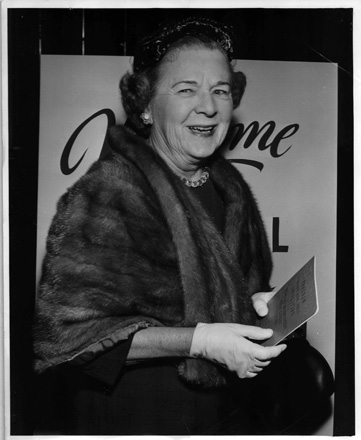
The long-time, local philanthropist died at the age of 71 on December 3, 1957, in Houston. With no children of her own to leave the Nash Ranch, Kittie willed her 15,000-acre property to a series of heirs, St. Mary’s Episcopal Church and the West Columbia Hospital District Trustees. After the death of the last of the heirs in 2006, the Kittie Nash Groce Ranch reverted to St. Mary’s Memorial, and the hospital district trustees who shared ownership equally.
Parts of the ranch are leased to area farmers and cattle raisers. In 2011, 400 acres were sold to the Nature Conservancy for the preservation of rare pristine prairie, a large section that had never been grazed or plowed. It remains one of the largest examples of native, coastal prairies still in excellent condition. A few years ago, the last vestige of the Nash Ranch was for sale. The property listing with texasagrealty.com showed the remaining acreage at 8,600 acres, and the asking price was $56 million several years ago.
During her lifetime Kittie generously supported youth programs at Columbia United Methodist Church and Greenhill AME Church while helping finance the construction of St. Mary’s Episcopal Church in West Columbia in 1953. She provided funds to establish both the Boy Scout Hut and Girl Scout Little House in West Columbia.
Even after her death almost 69 years ago, Kittie’s generosity built the Kittie Nash Groce Rehabilitation Center on Dance Drive in West Columbia, and, most recently, the Christian Senior Center secured a grant to build a 24,000-square foot facility at 313 N. 13th Street, across the street from the ambulance service. The building will house the country store and senior center. The senior center provides Meals on Wheels, take out or dine in lunches and activities. Construction is nearing completion, but an opening date has not been set.
More recently, generous contributions from the Kittie Nash Groce Foundation helped pay for renovations and painting of the historic Rosenwald School located behind the Columbia Historical Museum and her legacy foundation will continue supporting needy organizations in future years. The Rosenwald School is open for tours by visitors to the Columbia Historical Museum. It was originally built in 1921 to provide a school for Black children in the East Columbia area during the era of racial segregation.
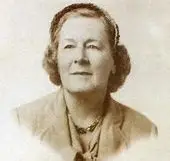
A studio photo of Kittie Nash Groce on display at the Columbia Historical Museum in West Columbia, Texas