

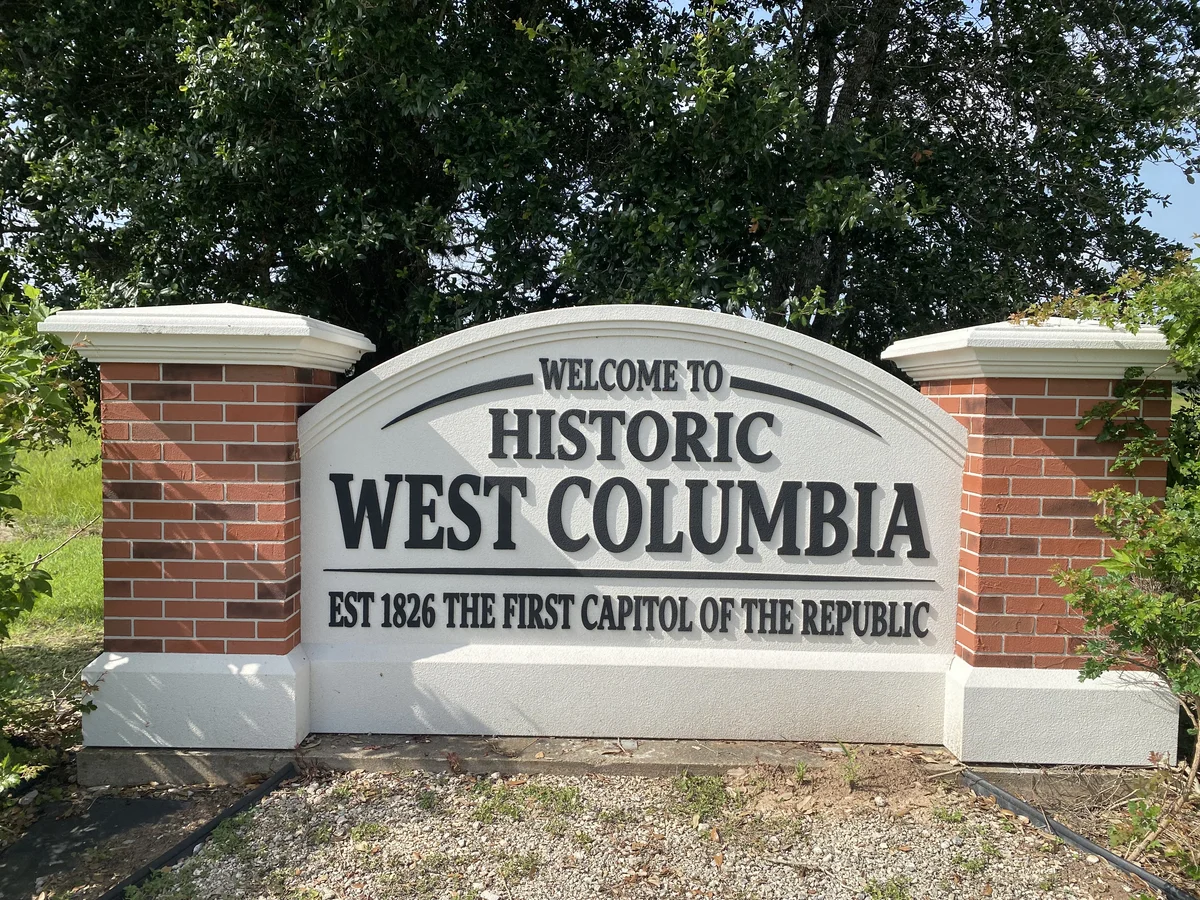
Plans are being made for the City of West Columbia to host its 200th anniversary celebration in October. City officials will join with the Texas Historical Commission and the First Capitol of Texas-Columbia 1836, Incorporated, board of directors to put on an event at Heritage Hall, 508 East Bernard Street, in West Columbia on Saturday, October 17, 2026.
“We are working out all the details now in preparation for this big event,” said Columbia Historical Museum secretary Tracy Gupton who is also secretary-treasurer of the Columbia 1836 board. “Plans are for the First Capitol of Texas-Columbia 1836 leaders to hand over the deeds to the property in the block across the street from the museum to the Texas Historical Commission at the October 17th event at Heritage Hall.”
Once the transfer of property deeds is finalized, the Texas Historical Commission will begin their project that includes building a visitor’s center and a replica of the Senate building as it appeared in Columbia in 1836. Plans are for the existing 1836 House of Representatives building replica on the lot beside the West Columbia Chamber of Commerce office to be relocated to the new state historical site fronting East Brazos Avenue where the vacated Republic Barbecue building and Cookie’s Hair Salon now stand.
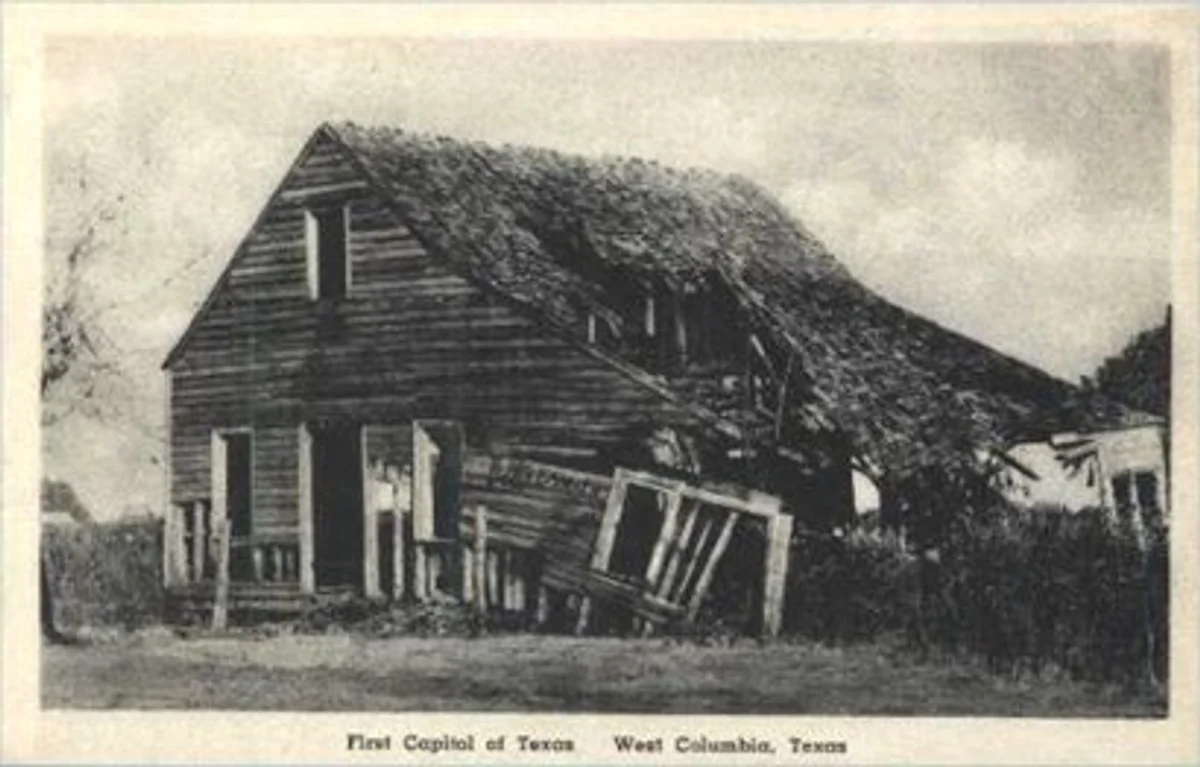
The First Capitol of Texas-Columbia 1836, Incorporated board of directors has been securing donations over the past year to raise the necessary funds to purchase the land along East Brazos Avenue in the block between Broad Street and 16th Street that will eventually become the new state historic site. The majority of the property in West Columbia’s Block 9 has already been purchased. The existing Columbia Historical Museum will remain at the corner of East Brazos Avenue and Broad Street and will be directly across the primary highway through downtown West Columbia from the new Columbia 1836 state historic site.
West Columbia Mayor Laurie Kincannon and Wes Griggs, president of the First Capitol of Texas-Columbia 1836, Inc. board of directors, both addressed plans for the new state historic site with Columbia Historical Museum board members over a year ago and expressed their beliefs that the proposed new historic site in downtown West Columbia will benefit the museum by increasing the visitor flow through the town’s existing museum. Both Kincannon and Griggs have said over the past year or two that once the new historic site is up and running, which could take several years to occur, tourists coming to West Columbia to visit the museum or new historic site would obviously want to walk across East Brazos Avenue to see what the other location has to offer. The museum at 247 East Brazos Avenue, which also has a historic Rosenwald School behind the museum to show off to visitors, highlights the history of West Columbia and East Columbia from the days of Karankawa Indians roaming this area of Texas to the 1800s when Stephen F. Austin brought his “Old 300” Anglo settlers from Louisiana into what was then part of Mexico, through the early 1900s when oil was discovered in and around West Columbia, right up to the present day.
On the other hand, the proposed new historic site will focus solely on Columbia in the years 1836 and 1837 when the town that is now known as West Columbia was the first capital of the Republic of Texas. Sam Houston was sworn in here as the Republic of Texas’s first president and Stephen F. Austin, “The Father of Texas” who was secretary of state in Sam Houston’s administration, died of pneumonia two days after Christmas in 1836 in West Columbia. By early 1837 the decision was made to relocate the capitol of the Republic of Texas to Houston. Mayor Kincannon has said many times that she has wanted a state historic site in West Columbia as close as possible to where the first capitol buildings actually sat 190 years ago. She is elated that plans are now in the works to have the Texas Historical Commission create just such a new historic site in downtown West Columbia.
“We are excited about this celebration of our city’s 200th anniversary,” Mayor Kincannon said.
“The senate building and house of representatives building were actually located close to where the Walgreens business is now,” Gupton said. “The brick cistern in the Walgreens’ parking lot is the most likely spot where the capitol buildings were in 1836 and 1837. The block adjacent to the nail salon that is next door to Walgreens is as close as we could get to the actual site. Through ongoing negotiations with those landowners, we were able to secure the deeds to the majority of the plats in the block we want to turn over to the Texas Historical Commission in October.”
Bryan McAuley, acting division director for historic site operations for the THC, has been working closely with the First Capitol of Texas-Columbia 1836, Inc. board in planning the new West Columbia historic site. He has appointed Allison Harrell as the new site manager. Both McAuley and Harrell have been attending meetings with Griggs, Kincannon and the local board to get the wheels of progress in motion on the new East Brazos Avenue historic site.
Mayor Kincannon has secured a commitment from Judge Ken Wise to serve as the keynote speaker at the October 17th event at Heritage Hall. Initial plans are for the program to begin at 11 a.m. with a meal to be served to those in attendance. Further details will be announced at a later date.
“Judge Ken Wise is a notable Texas historian and author of the popular podcast ‘Wise About Texas,'” Kincannon said. “We are so honored that he agreed to be our keynote speaker.”
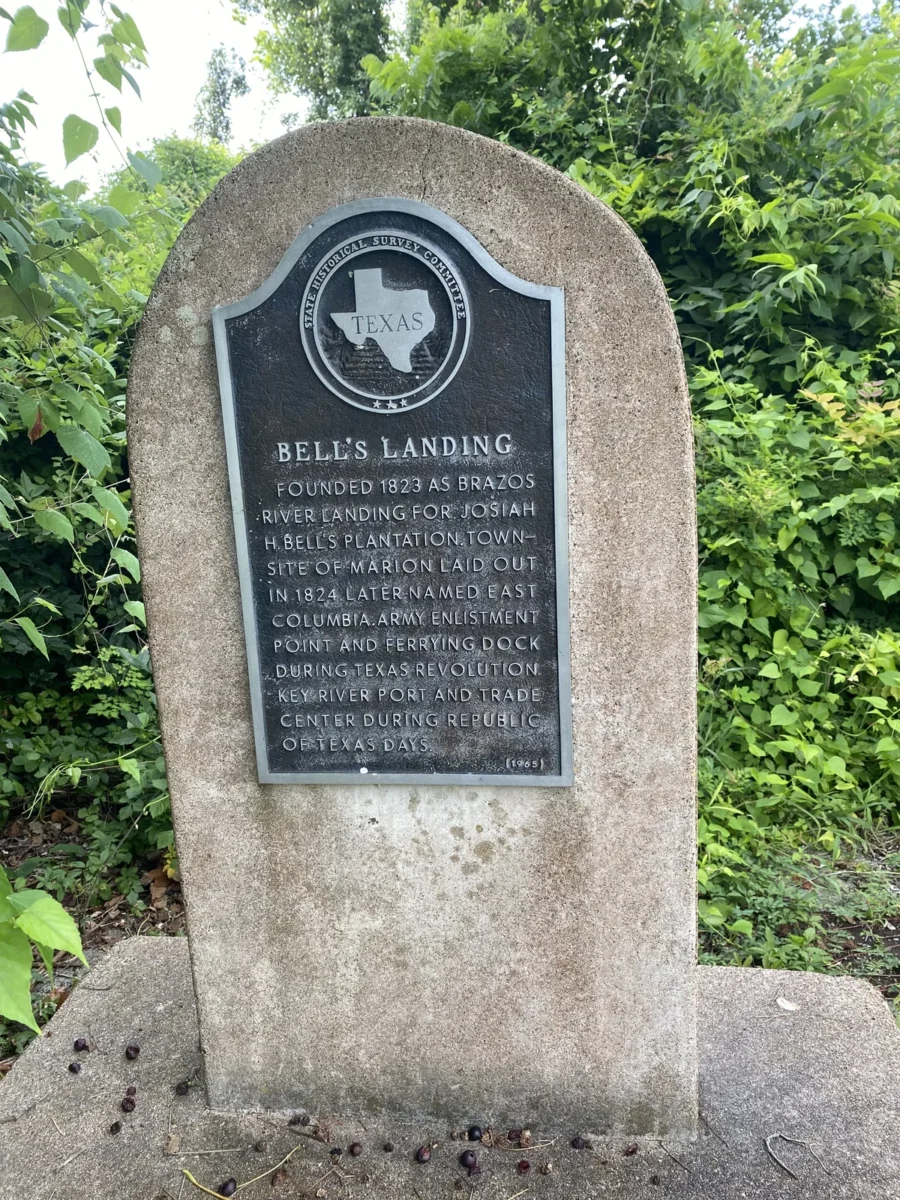
Descendants of Josiah and Mary Bell, the founders of both East Columbia and West Columbia, will be invited to attend the town’s 200th anniversary celebration and October 17th deed transfer ceremony at Heritage Hall. Many state and local government officials are also on the invitation list. Employees of the City of West Columbia will also be invited to take part in the city’s celebration of its 200th anniversary.
General admission tickets will go on sale to the public as the time grows closer to the planned celebration event.
Tracy Gupton is past president of the Columbia Heritage Foundation which runs Heritage Hall. He is also current president of the Columbia Cemetery Association that manages historic Columbia Cemetery in West Columbia where both Josiah Hughes Bell and his wife Mary Bell are buried. The cemetery, located between Loggins Drive and East Jackson Street in West Columbia (behind Bob Barta Lumber Company), is the final resting place of many early Columbia settlers and a few Texas Revolution heroes. The cemetery was originally part of the Bell family’s plantation and was donated to the West Columbia community by descendants of Josiah and Mary Bell.
Gupton is a fifth-generation West Columbian, a member of the Sons of the Republic of Texas, and an active member of the Columbia Historical Museum Board of Directors. He writes many stories that are posted on the museum’s website and Facebook page about local history. He found the following information about early Columbia days in a 1997 West Columbia Chamber of Commerce Directory that was given to him last week by West Columbia Mayor Laurie Kincannon. Gupton and Kincannon serve together in West Columbia Rotary Club, the Columbia Cemetery Association board, the Columbia Heritage Foundation board and the First Capitol of Texas-Columbia 1836, Inc. board.
“The twin cities of Columbia and Marion were laid out in 1826 by Josiah H. Bell, on a part of the original land grant he received from the government of Mexico,” Wes Griggs’ mother, the late Beth Griggs, wrote in a story titled “Columbia in the Days of the Republic” in the 1997 Chamber directory. “Josiah H. Bell was a longtime associate and personal friend of Stephen F. Austin, and his family was one of the original 300 families that comprised Austin’s colony. Bell was the man left in charge of the colony when Austin went to Mexico in 1821.”
Beth Griggs nearly reached her 100th birthday. She passed away a few years ago at 99 and was laid to rest at Old Columbia Cemetery next to her husband, Hall Griggs, who started the law practice in West Columbia that his son Wes now operates. In talking to local organizations over the past couple years, including Rotary Club and the Columbia Historical Museum Board of Directors, Wes Griggs would mention how much his mother and father would have loved to see the Columbia 1836 state historical site come to fruition in their beloved West Columbia.
“Josiah H. Bell first settled near Washington on the Brazos,” Mrs. Griggs wrote about Columbia’s founder first coming to Texas with Stephen F. Austin, “but in 1824 he moved to what is now Brazoria County and pitched camp on a creek that has since been called Bell’s Creek. About a year later he moved to his property fronting the Brazos River and built a ‘good dwelling house.’ The town of Marion (soon called Bell’s Landing) was planned as a depot for supplies. Bell erected docks, log lined with timbered steps. Soon there were sheds and storerooms, as well as a few houses.
“Columbia lay two miles down the prairie from Bell’s Landing, at the end of a broad road cut through the timber,” Beth Griggs wrote. “The surroundings were beautiful, studded by majestic live oak trees and luxuriant growth of a wide variety of plants. The road from Bell’s Landing was straight but not smooth, and was often covered by a deep trace of slush.
“In 1827, Josiah H. Bell moved to his plantation home, south of the town of Columbia, where he lived until his death in 1838. Squire and Mme. Bell offered hospitality and accommodations to a multitude of visitors. Most itinerant preachers were frequent visitors, as well as the president of the Republic (Sam Houston) who also used an office in the Bell yard.
“Columbia and Marion were first established as towns in the Brazos Precinct of Austin’s Colony, Department of Texas, State of Coahuila, Mexico,” Beth Griggs wrote. “On June 28, 1835, a group of citizens met at Columbia, and as an outgrowth of this meeting, the Committee on Resolutions recommended organization of a militia, appointment of a committee of public safety and correspondence, and a provisional government for Texas. Several other meetings were held including the one December 25, 1835, that recommended declaration of independence from Mexico.”
Mrs. Griggs’ story of early West Columbia history revealed that, “On July 23, 1836, President David G. Burnet called for an election to be held in September, at which time officials for the first regular administration of the Republic of Texas would be elected, and he named Columbia as the new capital. Obviously, there was no single building large enough to hold the entire government. Two buildings served primarily to house the Congress and offices of the officials, and a number of smaller log houses were used as offices and committee rooms.”
The first election of new republic officials conducted in Columbia resulted in General Sam Houston, hero of the Battle of San Jacinto where Texas won its independence from Mexico, being elected president, Mirabeau B. Lamar vice president, and Stephen F. Austin secretary of state. Twenty-nine representatives and 14 senators were chosen, and this first duly elected congress of the Republic met at Columbia, October 3, 1836.
In writing about captured Mexican President Antonio Lopez de Santa Anna, Beth Griggs said, “There was a pressing question as to what should be done with Santa Anna. He had been kept at Velasco from June 9-15, 1836, guarded by Captain Patton, and was then brought on the Laura to Patton’s home (now the Varner-Hogg State Historic Site) where he was kept for a short period of time. He was then taken to Orozimbo Plantation, the home of Dr. James A.E. Phelps, where he was kept until he was released.”
Griggs wrote that “This first Congress accomplished much” in Columbia. “They ratified the constitution, appointed committees, provided for the army and navy, protection from the Indians, created a judiciary, a postal department, a land office and established a financial system.”
There was not enough space or ample accommodations in Columbia for the large number of people who poured into the small community when our fair city was the first capitol of the Republic of Texas, “so the Congress voted to move the capital to Houston in 1837,” Mrs. Griggs wrote.