

By Tracy Gupton
It is speculated that whenever the Columbia 1836 First Capitol of the Republic of Texas state historic site in downtown West Columbia project is finished, it is expected to resemble the San Felipe de Austin site near Sealy. Earlier this year I accompanied Sandy Weems on a trip from West Columbia to Sealy to visit the San Felipe site. Wes Griggs, president of the Columbia 1836 First Capitol project committee and a fellow West Columbia Rotarian with Sandy and I, had shared with us how impressed he was with the state historic site at San Felipe. He wasn’t wrong.
For those interested in touring that site, it is located at 220 Second Street in San Felipe, Texas. You can call ahead at (979) 885-2181 to inquire about tours and to gather information about what the San Felipe site has to offer. It is open Tuesdays through Sundays from 9 a.m. to 5 p.m.
The Texas Historical Commission’s website reveals that the San Felipe site commemorates the location where, in 1823, Stephen F. Austin established a headquarters for his colony in Mexican Texas. The San Felipe historical site and museum share the stories of early settlers in this region. It is best known as the town that was burned by its own citizens as they evacuated during the Runaway Scrape of 1836, in fear that they would be captured and executed by the Mexican soldiers under the leadership of President and General Antonio Lopez de Santa Anna.
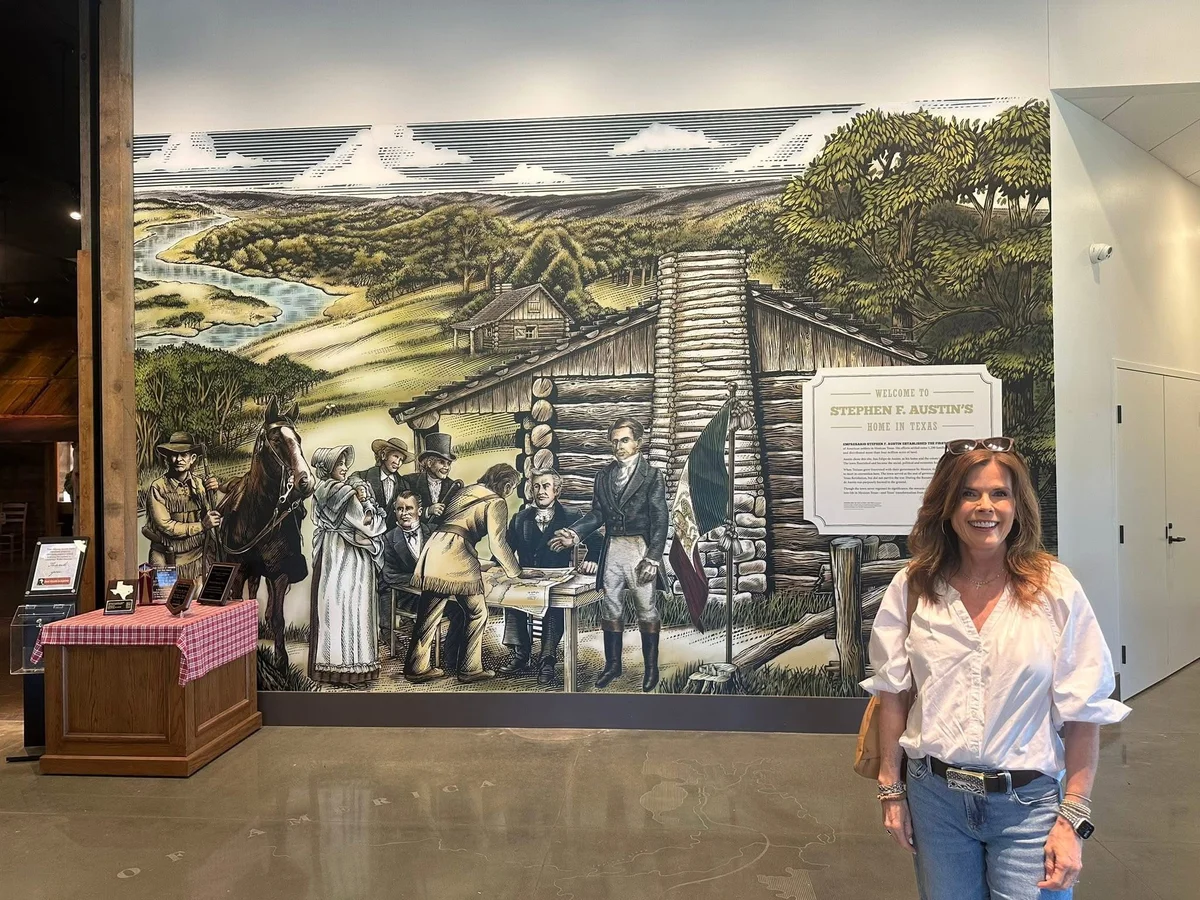
San Felipe de Austin was founded in 1823 by Stephen F. Austin as the capital of his colony. It became the first urban center in the Austin colony, which stretched northward from the Gulf of Mexico as far as the Old San Antonio Road and extended from the Lavaca River in the west to the San Jacinto River in the east. By October 1823, after briefly considering a location on the lower Colorado River, Austin decided to establish his capital on the Brazos River. The site chosen was on a high, easily defensible bluff overlooking broad, fertile bottomlands. The location offered a number of advantages, including a central location and sources of fresh water independent of the Brazos.
While the town design was based on the prevailing Mexican model with a regular grid of avenues and streets dominated by four large plazas, the settlement soon began to sprawl westward from the Brazos for more than a half mile. By 1828, the community comprised a population of about 200 with three general stores, two taverns, a hotel, a blacksmith shop, and some 40 or 50 log cabins. Ten of the inhabitants were Hispanic, and the rest were of American or European origin; males outnumbered females 10 to one.
The town was the social, economic, and political center of the Austin colony. Its expanding population fluctuated often and was swelled by large numbers of immigrants and other transients. When the town gained an ayntamiento (council), Austin built a residence on Sweet Creek (now called Bullinger’s Creek), a half mile west of the Brazos. From there he continued to direct the management of his colony while town leadership handled the affairs of the village. The colonial land office was headquartered in the town, and Austin assumed an active role in its operation. Regular mail service in the colony was inaugurated in 1826 when Samuel May Williams was appointed postmaster in San Felipe de Austin. With seven separate postal routes converging here, the town remained the hub of the Texas postal service until the Texas Revolution in 1836. One of the earliest newspapers in Texas, the Texas Gazette, began publication in San Felipe on September 25, 1829. Gail Borden’s Telegraph and Texas Register, which became the unofficial journal of the revolution, was first published in San Felipe de Austin on October 10, 1835.
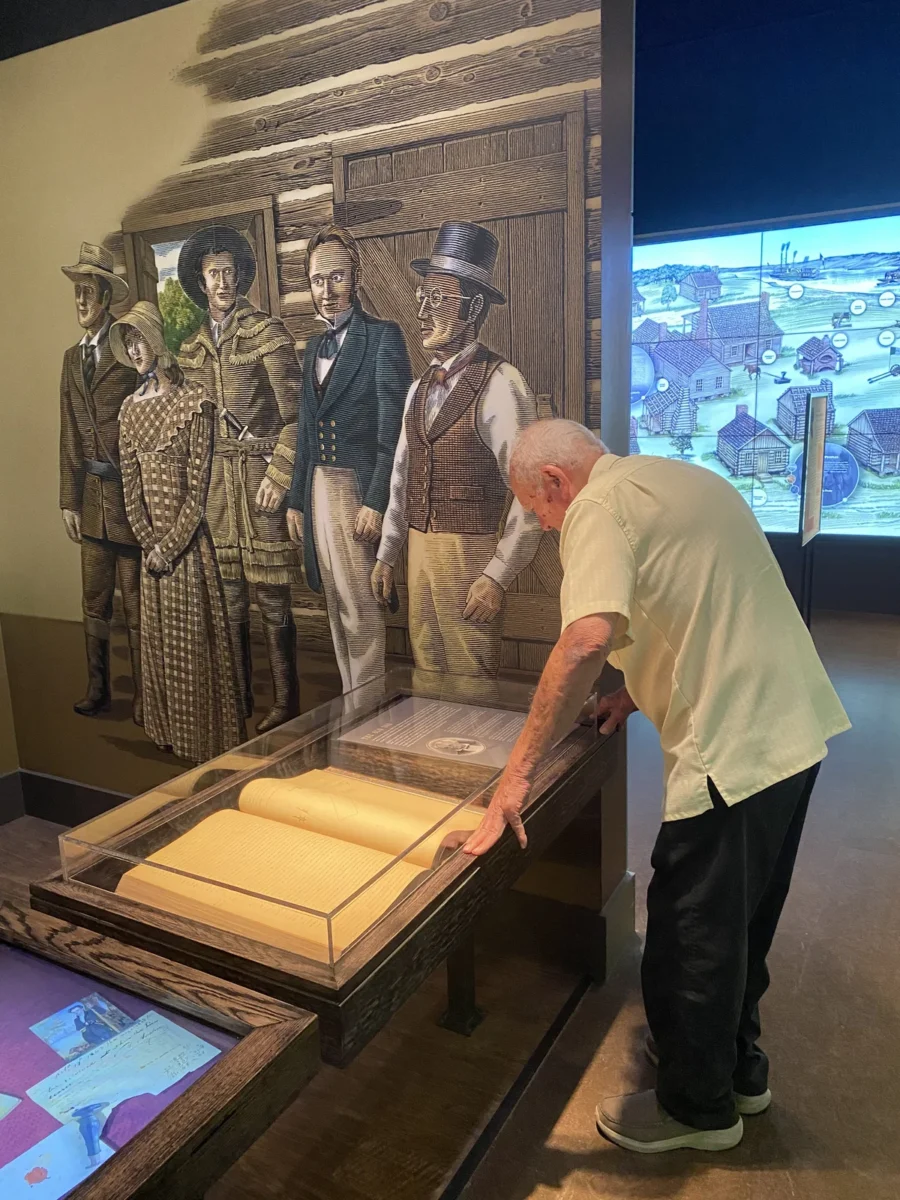
Many significant figures in early Texas history resided temporarily at San Felipe de Austin or visited periodically on business. The town’s notable early inhabitants included Josiah H. Bell, Samuel May Williams, Jonathan and Angelina Peyton, Noah Smithwick, and Horatio Chriesman. Several large cotton plantations were established in the bottomlands near the town during the 1820s, and from the outset, Austin’s colony became a trading center for the staple. Josiah and Mary Bell would later relocate to the East Columbia/West Columbia area where Josiah founded the early Texas communities of Marion (East Columbia) and Columbia (West Columbia) in the 1820s.
By the eve of the Texas Revolution, San Felipe de Austin ranked second only to San Antonio as a commercial center. Its population in 1835 approached 600, and many more settlers resided nearby within the boundaries of the municipality. William B. Travis, Robert McAlpin Williamson, and other prominent Texian leaders had established residence in the town in the 1830s. In view of the significance of the capital in the life of the colony, it was inevitable that San Felipe de Austin should play an important role in the events of the Texas Revolution. The conventions of 1832 and 1833 were held in the town, and as the site of the Consultation of November 3, 1835, San Felipe de Austin served as the capital of the provisional government until the Convention of 1836 met the following March at Washington-on-the-Brazos.
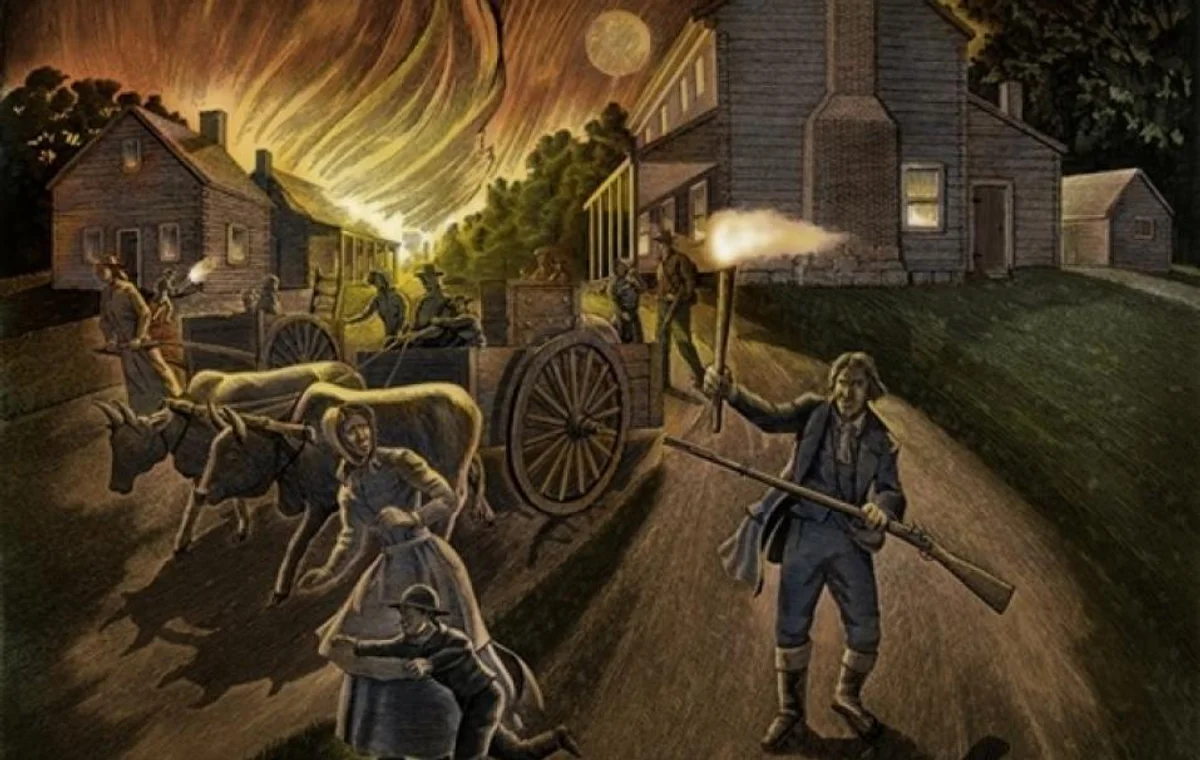
After the fall of the Alamo, General Sam Houston’s army retreated through San Felipe de Austin. On March 29, 1836, the small garrison remaining at San Felipe to defend the Brazos crossing ordered the town evacuated and then burned it to the ground to keep it from falling into the hands of the advancing Mexican army. The terrified residents hastily gathered what few belongings they could carry before fleeing eastward during the incident known as the Runaway Scrape.
By May 1836, as news of the Texans’ victory at the Battle of San Jacinto spread, residents began returning, and some semblance of community life was restored near the original townsite. Yet many families never returned, and the government of the republic was unable to resume operation in the town due to the lack of necessary buildings. San Felipe was incorporated in 1837 and became the county seat of the newly established Austin County. Though a courthouse was planned, the town never recovered its former stature. By the mid-1840s, the only other buildings in the settlement were six or seven log houses and a tavern. In 1846, a county election made the new community of Bellville the county seat and the removal of administrative functions from San Felipe was completed in January 1848. In 1940, the town of San Felipe donated most of the original townsite property associated with Commerce Square to the state.
Source: Handbook of Texas Online and proprietary site research
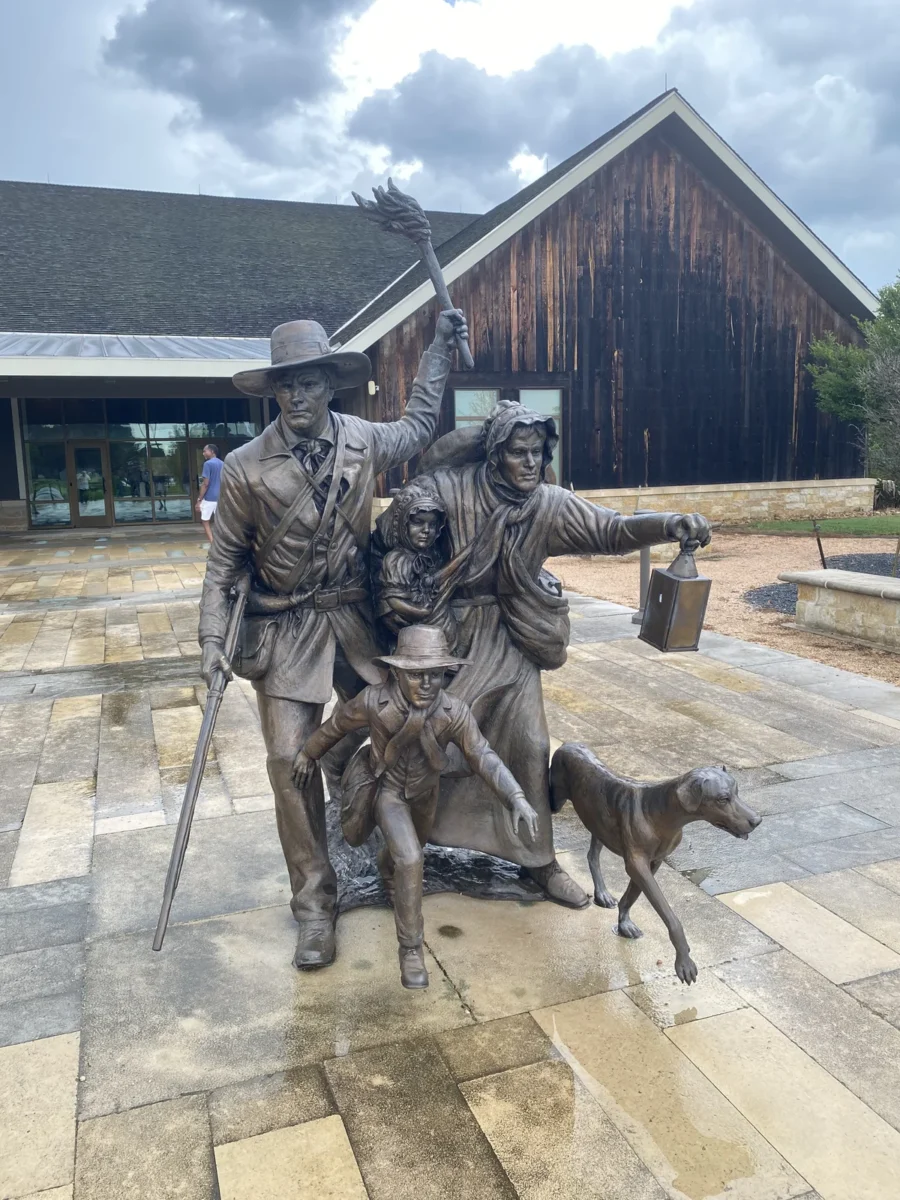
Columbia Historical Museum Secretary Tracy Gupton took this picture of the entrance to the San Felipe de Austin State Historic Site near Sealy earlier this year on a visit with fellow West Columbian Sandy Weems. The site’s visitors center is in the background.
A special exhibit at the San Felipe state historic site will be showcased Saturday, May 23rd, between 9 a.m. and 5 p.m. “Bypassed by Freedom but Building a Legacy” will highlight the stories of the enslaved in San Felipe de Austin. Starting Saturday, visitors to the San Felipe site can learn about five different people who lived there under enslavement: Mary Marks, Turner Morgan, Celia Allen, Joe Travis and Simon Austin. Each of these enslaved people impacted the town’s story in numerous ways. From witnessing the Battle of the Alamo to being the subject of the first trial-by-jury in Texas, these people’s legacies go far beyond the years they lived, says the San Felipe website. From Memorial Day Weekend through Labor Day, learn how history was shaped by them and what more there is yet to uncover about their lives.
This special exhibit is being presented at San Felipe state historic site as part of TexasAmerica250, commemorating the 250th anniversary of the signing of the Declaration of Independence in Texas.
The San Felipe website states that the Descendants of Austin’s Old 300 held their first meeting on June 27, 1987, at the Stephen F. Austin State Park in San Felipe, underneath the oak tree where the bench now sits. Their main objective was, and still is, to inspire current and succeeding generations to preserve memories of the spirit, courage, and character of the men and women who came to Texas as part of Stephen F. Austin’s first colony.
The San Felipe website says that the Descendants of Austin’s Old 300 organization has donated the benches at San Felipe de Austin and at Freedom Park in West Columbia. Josiah and Mary Bell, members of The Old 300, are buried at historic Columbia Cemetery in West Columbia. 2026 marks the 200th anniversary of Josiah Bell founding the town of Columbia, now known as West Columbia, in 1826.
Plans are being made to have a public celebration on October 17th of both the City of West Columbia’s 200th anniversary and a transfer of property deeds from the Columbia 1836 First Capitol committee to the Texas Historical Commission at Heritage Hall in West Columbia. More details about that event will be publicized when the plans are finalized.