

By Tracy Gupton
The collaboration between Julius Rosenwald and Booker T. Washington led to the building of nearly 5,000 schoolhouses for African American children across the South. By the time segregation ended, the “Rosenwald Schools” that sprang from this unlikely partnership were educating one-third of the South’s Black children and represented a significant step in the ongoing endeavor to bring high-quality education to every child in America.
Rosenwald was the president of Sears, Roebuck and Company and a leader in Chicago’s Jewish community. While Washington was the founder of the Tuskegee Institute in Alabama and the most esteemed Black man in the country in 1911 when he and Rosenwald got together.
“It was a chance encounter on a train and their mutual connection to the YMCA movement that led to the meeting, which later seemed so invevitable, between Booker T. Washington and Julius Rosenwald,” writes Stephanie Deutsch in her 2011 book titled ‘You Need a Schoolhouse: Booker T. Washington, Julius Rosenwald, and the Building of Schools for the Segregated South.’
“On one of his northern trips, Washington fell into conversation with Wilber Messer, a white minister and the general secretary of Chicago’s YMCA,” Deutsch goes on to write. “He asked Messer if he could suggest a wealthy person from Chicago who might have an interest in serving on the board of Tuskegee. Messer named Julius Rosenwald. He then ensured that the two men would meet by inviting both to speak at the annual YMCA dinner in Chicago in May 1911.”
Messer lost no time in scheduling a meeting. This was the ember that lit the fire for the Rosenwald Schools idea. Deutsch says in her book that Julius Rosenwald agreed to donate $25,000 for a YMCA for Black people in Chicago “provided that $75,000 more could be raised from the local community, both black and white.”
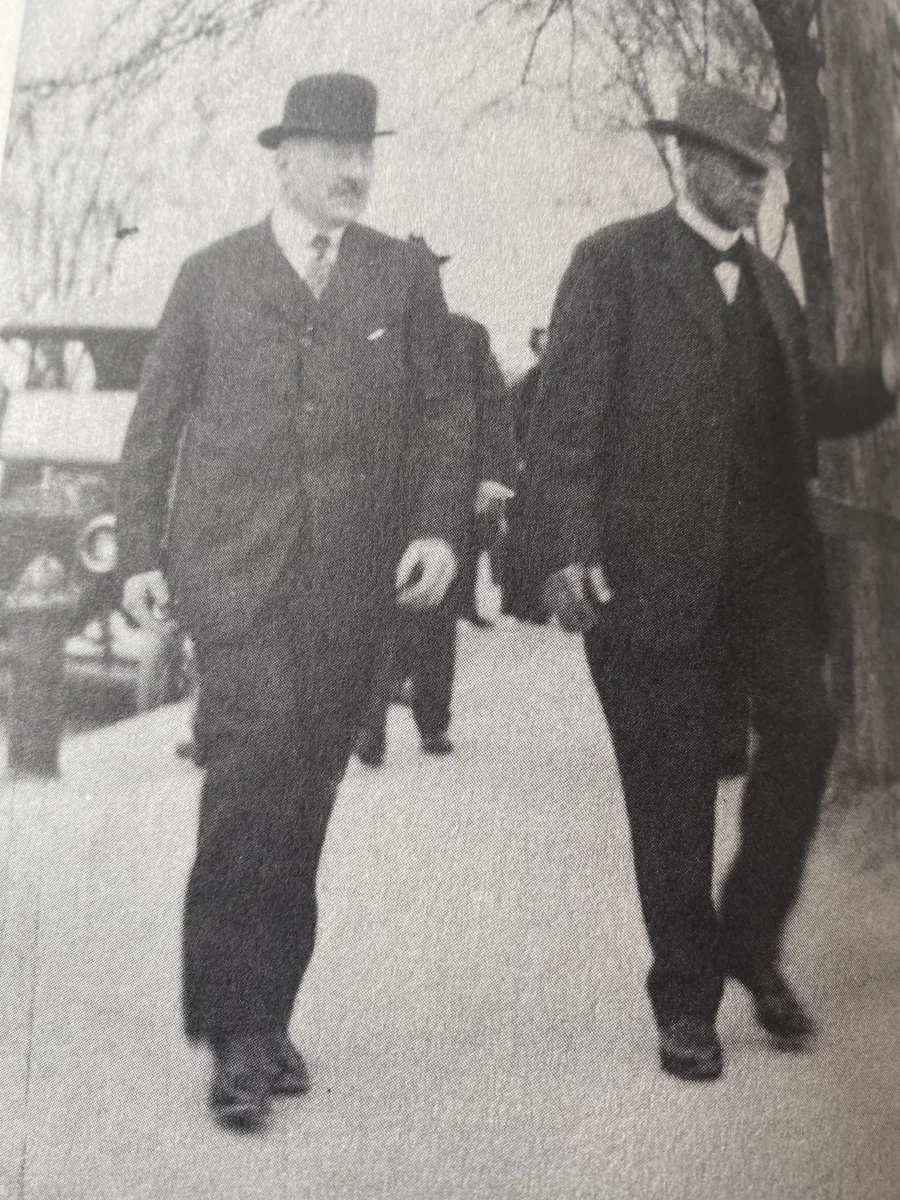
Speaking to a large Black audience at the Odd Fellows’ hall in downtown Chicago in 1911, Rosenwald said, “I feel a peculiar sympathy with a race that does not have a fair chance under the existing conditions of American life,” because he was Jewish and could not be admitted to the city’s University Club. Despite being one of the wealthiest businessmen in Chicago, Julius still faced persecution and “drew a parallel between blacks and Jews.”
“Two months before meeting Rosenwald, Booker T. Washington was assaulted on a street in New York City,” Deutsch writes in her book. “His attacker, who later said that he had been alarmed by the sight of a black man lurking around the lobby of his apartment building late in the evening, chased him down the street and beat him over the head with his walking stick. Washington tripped and fell. Police called to the scene initially refused to believe that the distraught and bleeding man was the famous educator. At a nearby hospital it took sixteen stitches to close the wound in his head. Washington received much private sympathy from friends and colleagues, but if nothing else, becoming himself a victim of violence was a powerful reminder to him of the extreme racial animosity he tried so hard to minimize.”
Deutsch states in her book on the Rosenwald schools, “Rosenwald invited forty-five prominent Chicagoans to join him for lunch to meet Booker T. Washington at the elegant new Blackstone Hotel that overlooked Lake Michigan from its site on Michigan Avenue. The twenty-five men who gathered there on an unusually hot May 18 included Julius’s brother Morris, his Sears colleague Albert Loeb, and his YMCA associates Wilber Messer and William Parker. The guests were a cross-section of Chicago’s civic leadership, and they were all white men. The man the luncheon honored was the hotel’s first black guest.”
Washington’s remarks at the luncheon were brief but he said much more that evening at a dinner with more than 400 guests honoring the anniversary of the founding of the YMCA. Washington, who was introduced to the crowd by Rosenwald, said that blacks “learn the habit of giving from their financial support of the black church. We inherited no church houses since we became a free people. Within 45 years we have erected 35,000 church buildings and in 90 percent of cases the money with which to erect these buildings has come out of our own pockets. And, Mr. Rosenwald, if you had not done anything else through this movement than to give the white people of this city of Chicago a chance to know the kind of colored people they have … it would have paid for itself.”
Sometime during the course of this very full, very warm day, Deutsch writes, Washington asked Rosenwald if he would consider becoming a member of the board of Tuskegee Institute. “Julius said that he wanted to visit before he made up his mind,” Deutsch states.
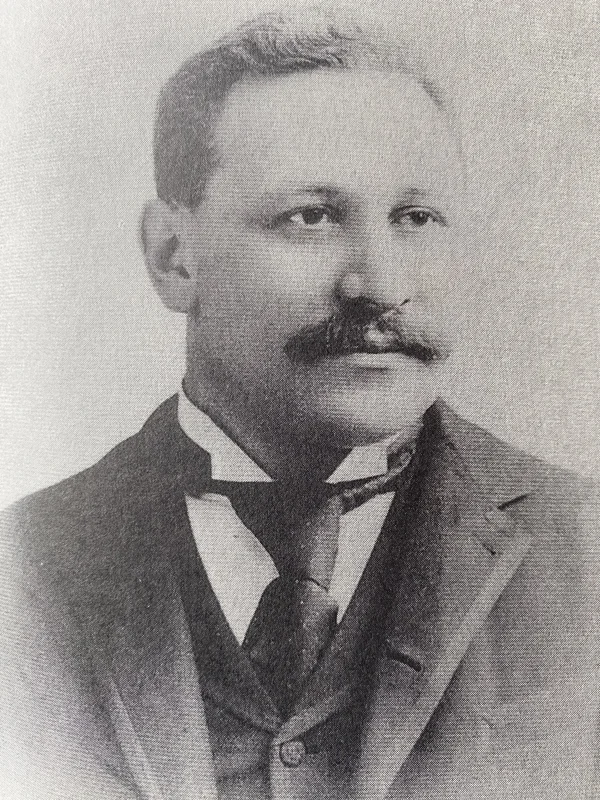
Deutsch writes that “Tuskegee–southern, rural, and black–was a world away from bustling Chicago. Yet what Julius Rosenwald found on his first visit there captivated his interest and retained his affection for the rest of his life.”
Rosenwald agreed to join Tuskegee’s board of directors and, on September 12, 1912, he threw his support behind Booker T. Washington’s plan “for the helping of colored people in the direction of small country schools.” Deutsch writes in her book that Washington’s suggestion was, “Each small school building would receive $350 from the funds Julius had already donated on the condition that the people in the community or the public school authority raise an equal amount. Traveling expenses of $50 per school would be spent for someone from Tuskegee ‘to get people stirred up and keep them stirred up until the school-houses have been built.'”
Booker T. Washington’s son, Booker Jr., began working with the school building program by 1915. Booker Sr.’s health problems were beginning to slow him down a bit so his son took up the slack.
In the summer of 1915, the Tuskegee Extension Department published a booklet providing in great detail how communities across the South should pursue their own schoolhouse through the Rosenwald program. The steps included conferring with school authorities of the local district to ascertain a proper location for the new school, situating the building with an east or west orientation so as to maximize natural lighting, situate the schoolhouse on at least two acres of land for gardens and playgrounds, cloakrooms separate from the classroom should be provided, and desks should be simple. The Rosenwald School behind the Columbia Historical Museum provides an ideal example of how the East Columbia schoolhouse for Black children was designed.
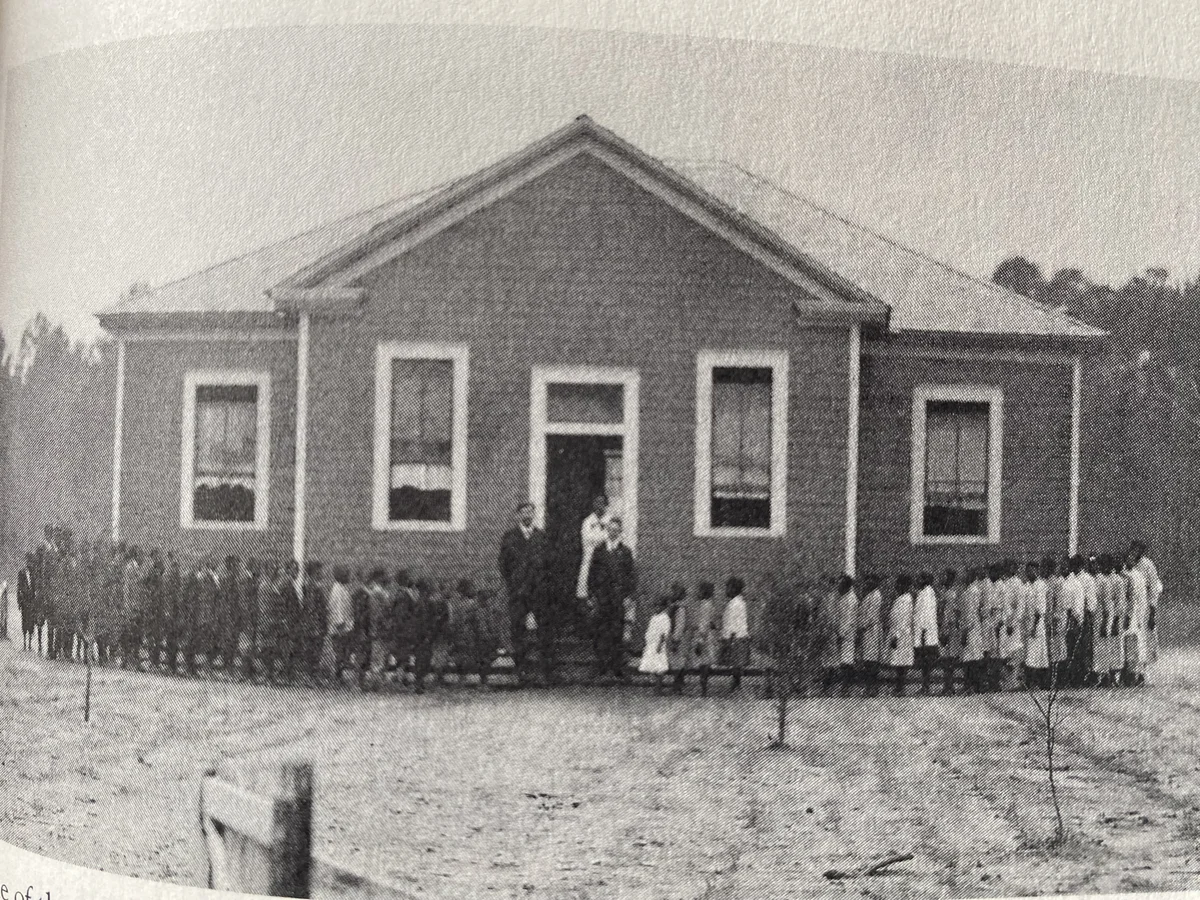
Booker Taliaferro Washington Sr. died from arteriosclerosis long before the East Columbia Rosenwald School was built in 1921. “But what of the plan to build small rural schoolhouses?” Deutsch wrote in her book. “What could replace the extraordinary attention and care that Booker T. Washington had personally focused on them? With Washington gone, Rosenwald was the guardian of their shared vision of a partnership with rural southern communities to build modern schoolhouses for their black children.”
In 1917, Julius Rosenwald approved funding for 300 more schools to be built under the supervision of Tuskegee Institute in response to requests from states across the South, Deutsch went on to say. “During the 1920s the school-building program was extraordinarily productive, producing more than four hundred schoolhouses a year.”
The author said that Julius Rosenwald attended the dedication of the 4,000th Rosenwald school in Method, North Carolina, in 1928. By 1932, she said, there was a Rosenwald school in every county with significant black population in the South.
Julius Rosenwald suffered from heart disease and died January 6, 1932. When the Rosenwald program ended in 1932, Deutsch writes that it had built 4,977 schools, 217 homes for teachers and 163 separate shops. “These buildings were located in every state of the American South, from Maryland to Texas. With 813 schools, North Carolina had the most, but Texas and South Carolina were close behind, with 500 buildings each.”
Deutsch went on to say that “the bulk of the money that built the five thousand Rosenwald schools–more than $18 million–came from the state governments that became their proprietors and administrators. Almost $6 million–a sum greater than Rosenwald’s financial donation–came from local people, most of them black, most of them poor. They donated not just money but also land, building materials, labor, food for workdays, and–most important–the energy and persistence to insist the schools be built. Theirs was the crucial ingredient; theirs was the contribution without which the schools would not have existed, without which they would not have been the significant elements in their communities that they became.”
Open for tours since 2009, the Columbia Historical Museum’s prized Rosenwald School is now in its 17th year of being available to visitors of the museum as part of their immersion into a world long since gone. The museum at 247 East Brazos Avenue in downtown West Columbia is chock full of artifacts and displays highlighting the history of the small Brazoria County community that once was the first capital of the Republic of Texas in 1836-37.
The Rosenwald School is located directly behind the museum, which formerly was the First Capitol Bank building and briefly served as West Columbia’s public library. The schoolhouse is at the corner of Broad Street and Clay Street.
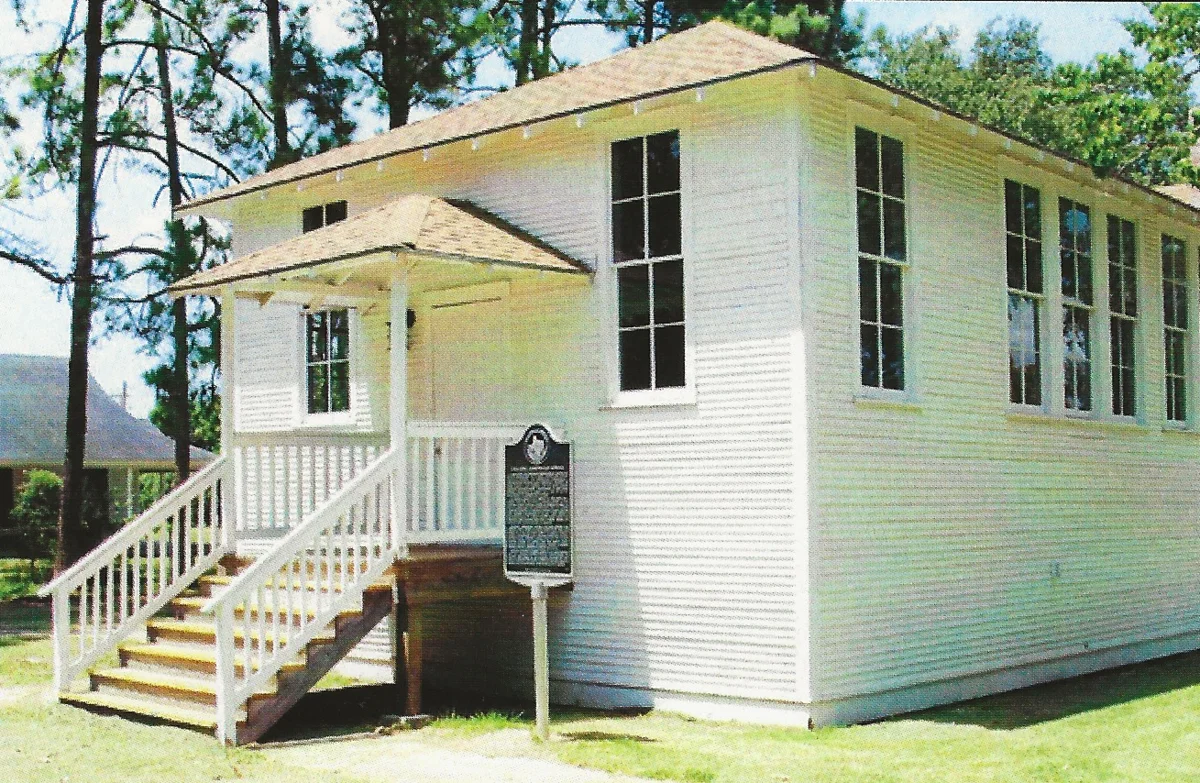
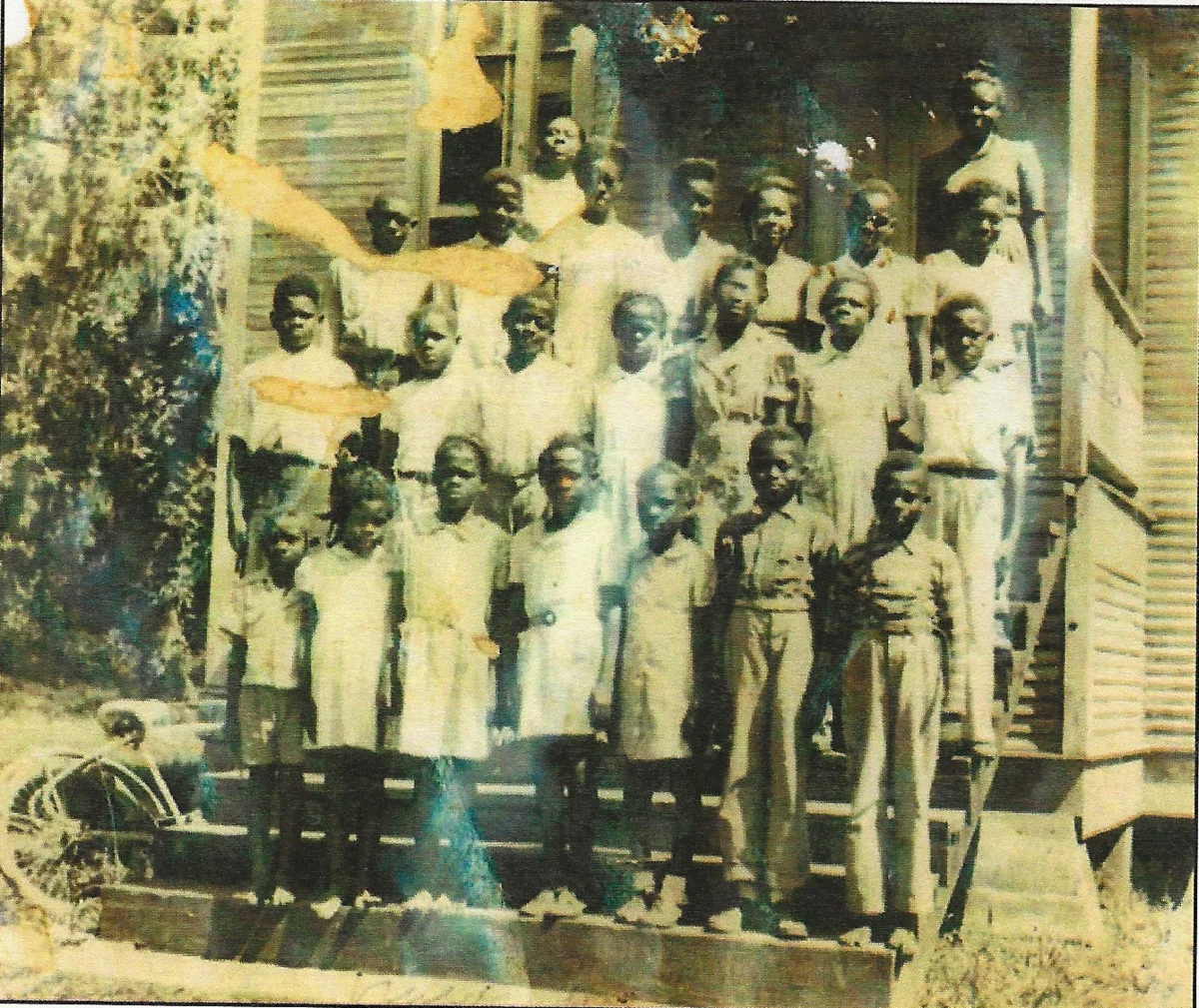
The Columbia Rosenwald School was built in 1921, and for nearly 30 years served as the center of education for the Black children living in the East Columbia area. In the state of Texas, the only ones still standing today are in Cedar Creek (built in 1922), Lockhart (built in 1923), Seguin (built in 1924), Linden (built in 1925) and Dayton (built in 1927), along with West Columbia’s historic school building.
Former Brazoria County News editor Teena Maenza wrote in her 2006 publication, The Columbia Rosenwald School, that “only around 40 still exist” in the nation. She wrote that most Black children in the West Columbia/East Columbia area were educated in churches or lodge halls, “wherever space could be found.”
“Despite the fact that the Civil War had been over for four decades, there had been no consistent effort made to educate black children, especially in the small rural communities,” the late Teena Maenza wrote. “The responsibility for education fell to the churches, and the quality varied widely.”
In giving tours of the West Columbia Rosenwald School, longtime Columbia Historical Museum board member Naomi Smith explains to visitors that the philanthropic endeavor spearheaded by Tuskegee Institute founder Booker T. Washington and former Sears, Roebuck and Company President Julius Rosenwald required local community involvement in order to acquire the financial assistance from Rosenwald and Washington.
“Rosenwald believed that any community desiring a school had to be willing to contribute matching funds,” Maenza wrote. “Not only did the black segment of the community have to donate, but the white segment as well, and the local school board had to take ownership and oversee the education of the children.”
Maenza wrote that the Rosenwald-Washington fund contributed one-third and the local communities had to come up with the additional two-thirds of the total amount needed to build these schools for Black children.
Visitors to the West Columbia Rosenwald School are informed that all of the schools were built so that the classrooms received sunlight through the large glass windows on the proper side of the school, and the students’ desks were arranged with the larger windows on their left side so that no shadows would be cast on their work. The smaller windows on the western side are placed higher on the wall, situated above the chalk boards.
“The Columbia Rosenwald School sits on a pier and beam foundation,” Maenza wrote in her booklet that is still being handed out to visitors today. “It was originally five feet off the ground due to its close proximity to the Brazos River when it was constructed in East Columbia.”
Former Charlie Brown High School coach Morris Richardson, who was an original member of the Columbia Historical Museum Board of Directors, told his fellow board members that he had taught in a Rosenwald school in the early days of his teaching career and that he believed a building outside of West Columbia being used as a hay barn had formerly been a Rosenwald school. Through a little research it was discovered that the hay barn actually was the old school house for Black children that had been moved from its original location in East Columbia to a pasture just south of where the school had been originally built.
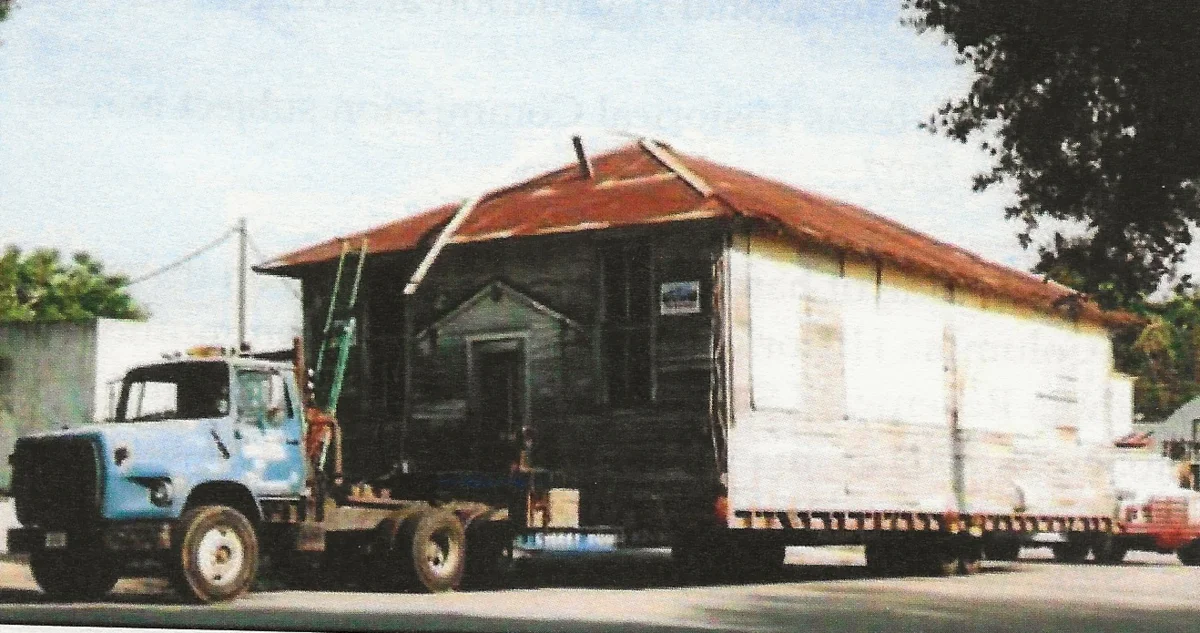
Through the dedicated efforts of Coach Richardson and his wife Lois, Emma Womack and her son, Bill Womack, and others, the museum board was able to purchase the hay barn/school house from the Jimmy Phillips estate through Alex Weems in 2002. After persuading the West Columbia City Council to allow the museum board to place the Rosenwald School on the lot directly behind the museum, with the front door of the school facing Clay Street, the real work began.
Maenza writes that, “After a decade of hard work and dedication on the part of the Columbia Historical Museum and the community, the Columbia Rosenwald School opened to the public on October 24, 2009, as an interactive space giving children the opportunity to experience what attending school was like in the 1920s.”
Smith shares credit for achieving this worthwhile endeavor with several corporate sponsors–such as the Meadows Foundation, the Lowe’s Charitable and Educational Foundation, and the National Trust for Historic Preservation–and alumni of the original East Columbia school who volunteered to pitch in.
Efforts on the part of the museum board were eventually successful to obtain a Texas Historical Commission subject marker that was placed in front of the Columbia Rosenwald School in December of 2007.
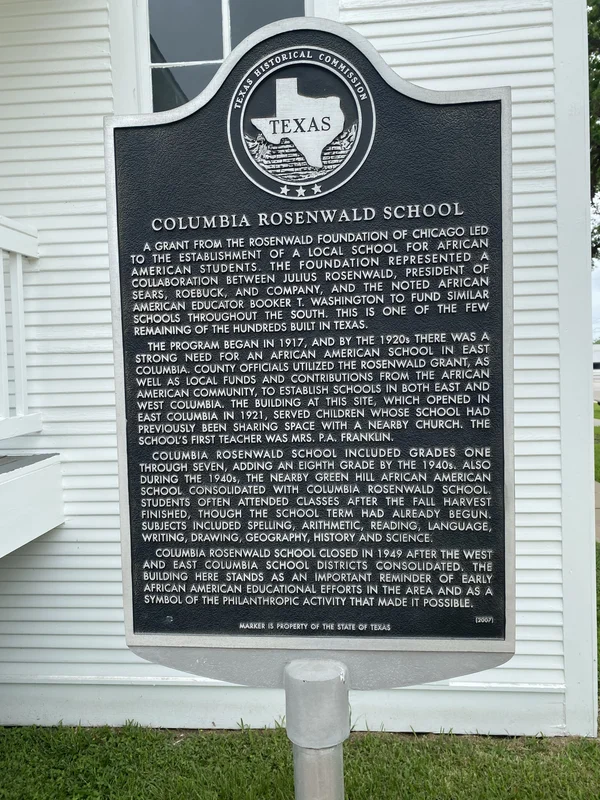
Smith says that the school for Black children was used in East Columbia from 1921 to 1948.
In her writeup for the 2024 btel phone book that featured a drawing of the East Columbia Rosenwald School on the cover, Smith says that the East Columbia school was one of five Rosenwald schools constructed in Brazoria County. “It’s the only (Rosenwald) school left standing in Brazoria County and is one of only five remaining in Texas today,” she said.
“All (Rosenwald) schools were to be placed with front doors facing north,” Smith wrote. “This allowed the sun to shine on the students’ shoulders, and not on their faces.”
Smith said that the Columbia Rosenwald School is “the only one currently used as an interpretive center with period desks, the original teacher’s chair, a replica of what was used as a desk for the teacher, and one desk from its time of glory. Eighty-five percent of the material in the school is original.”
She said that the land for the East Columbia Rosenwald school was donated by former slave Charlie Brown of West Columbia, “who never learned to read or write but amassed a fortune in land and money. When Charlie Brown died in 1921, he was the fifth wealthiest man in Texas.”
For further information about the Columbia Historical Museum or its Rosenwald School, contact the museum at (979) 345-6125.