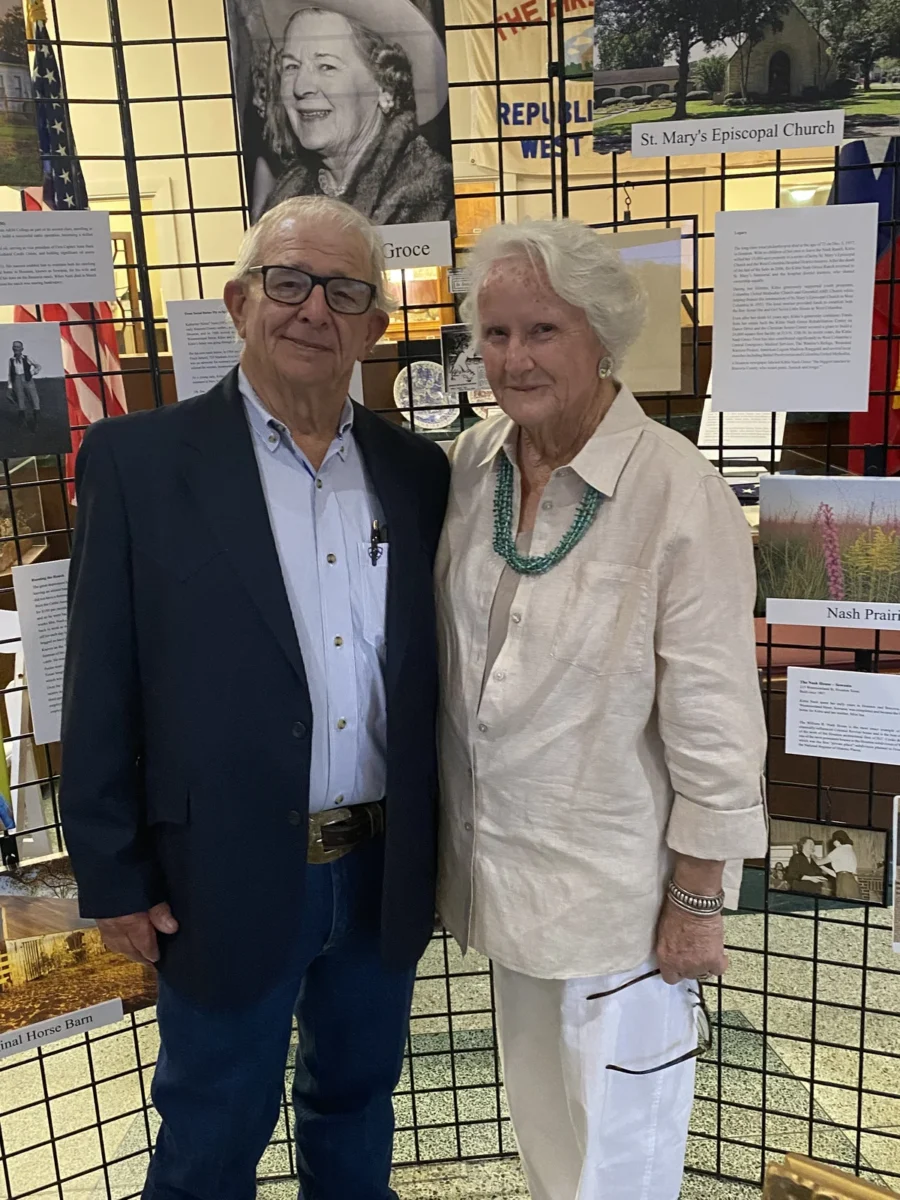

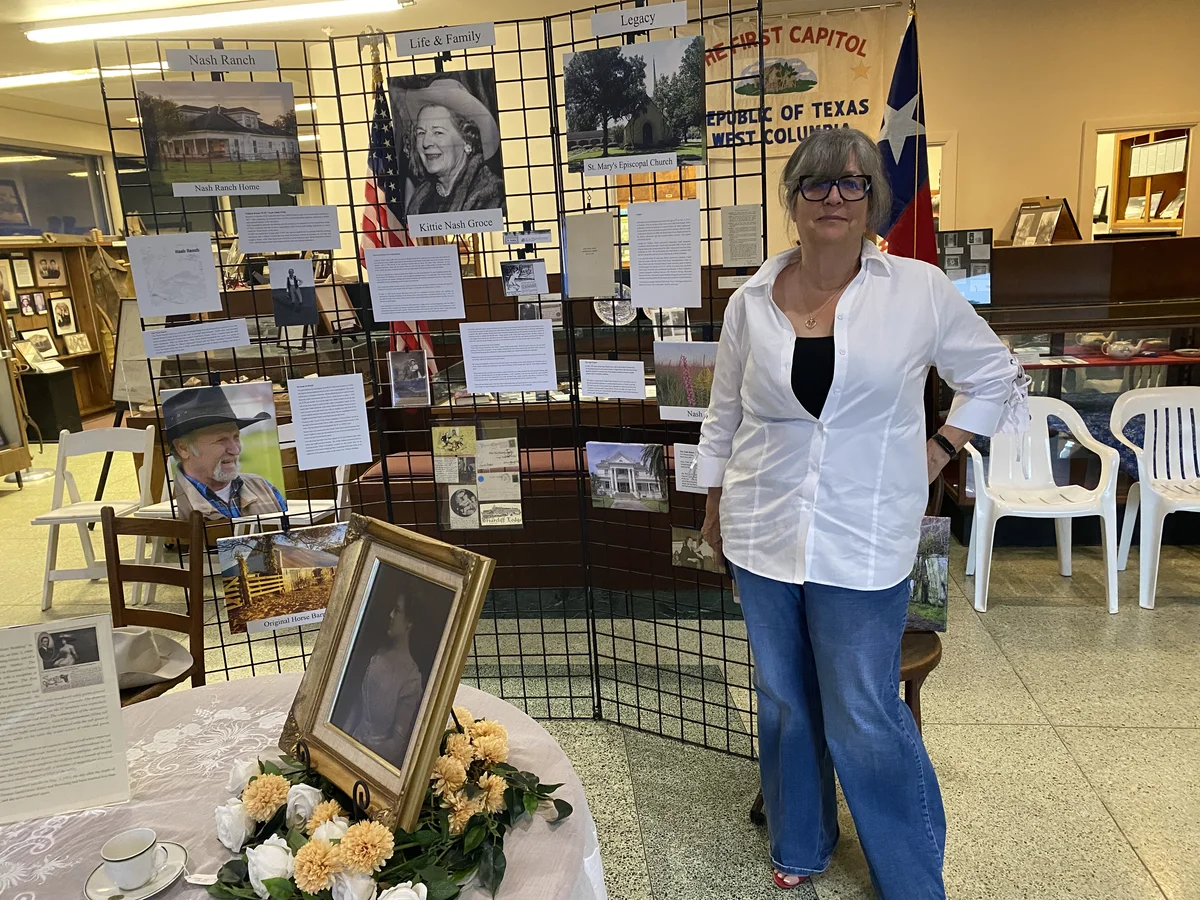
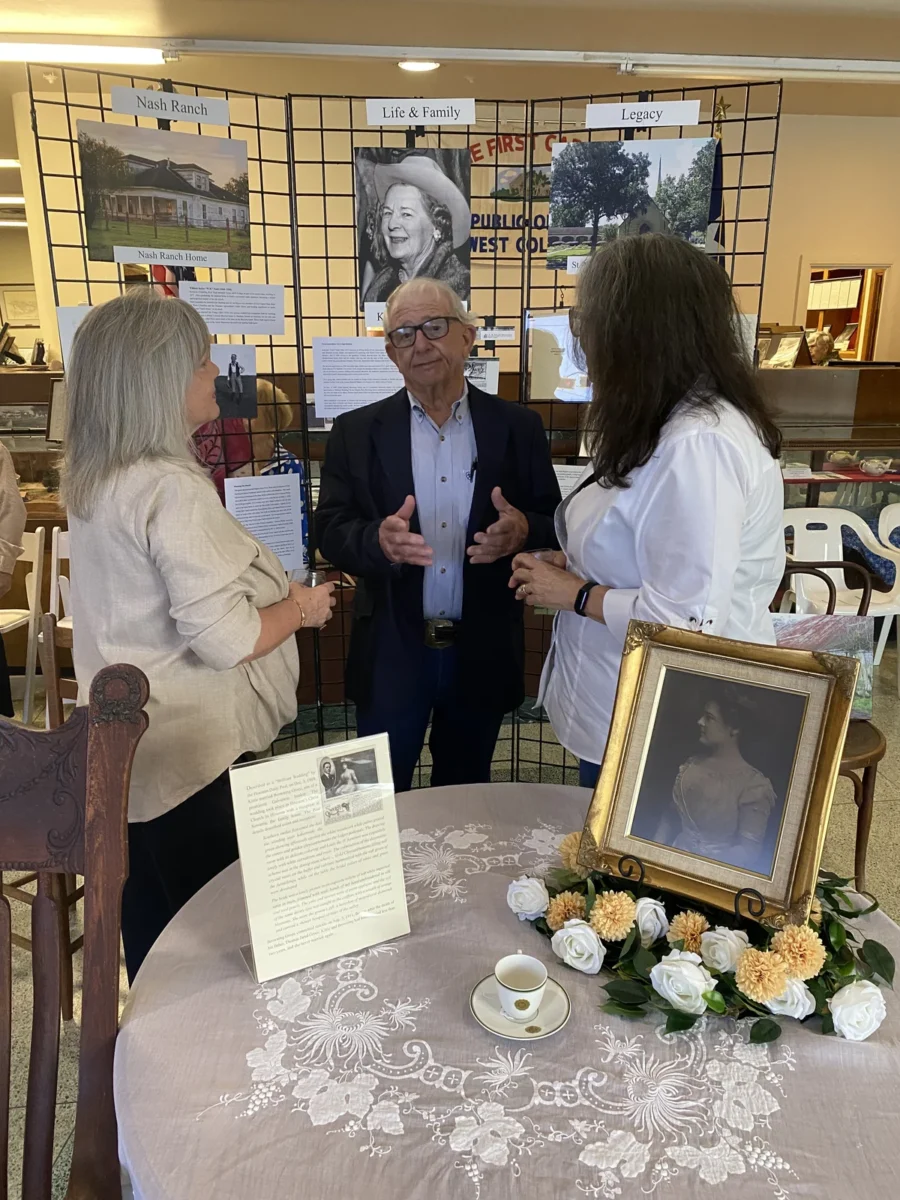
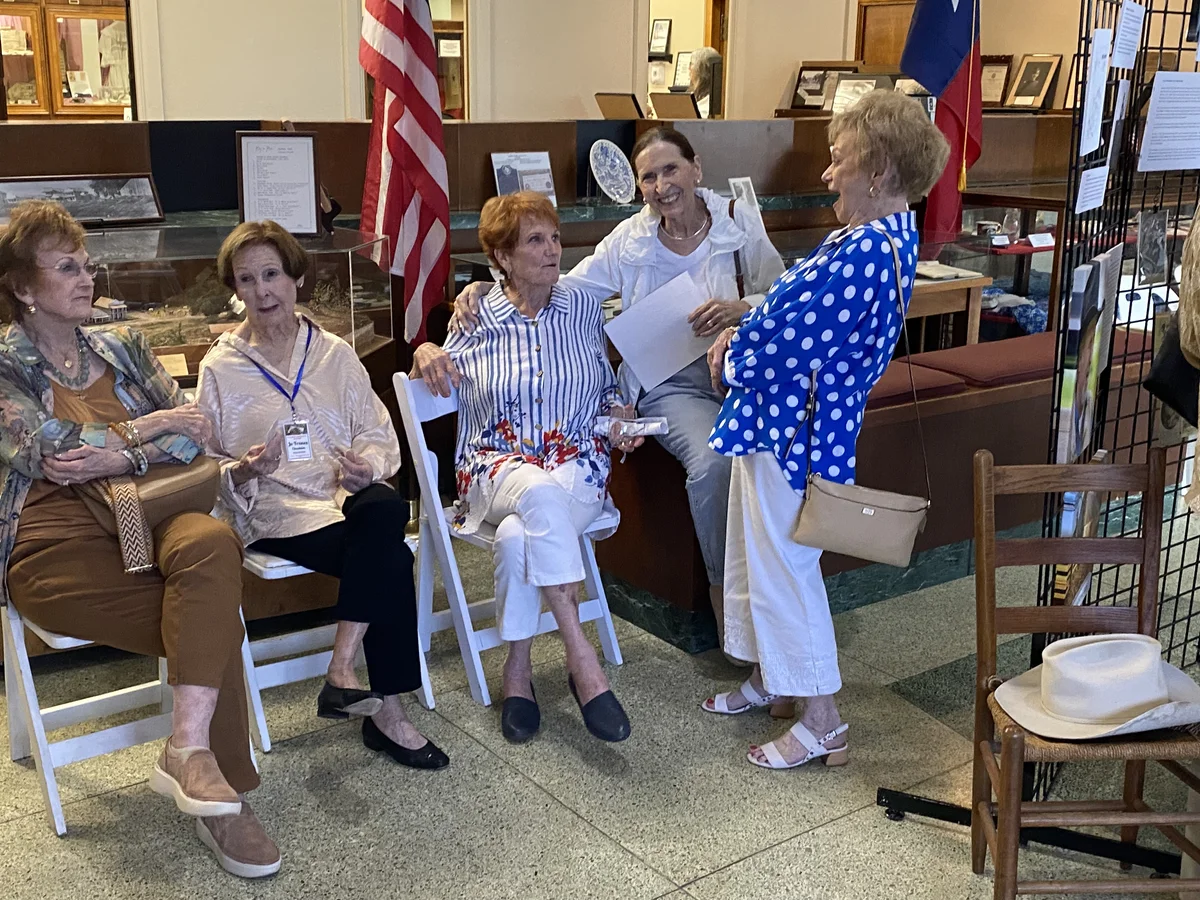
A special open house at the Columbia Historical Museum Wednesday night presented invited guests with the first look at a new exhibit on philanthropist Kittie Nash Groce. Ellen Adriance of Columbia Lakes worked with CHM manager Sally Rueffer and a few board members in designing the special display near the entrance to the museum at 247 East Brazos Avenue in downtown West Columbia. The Kittie Nash Groce exhibit will remain on display throughout the month of May. Everyone is encouraged to visit your local museum during May as well as the months beyond to take in the multitude of historical artifacts and displays featured in both the museum and the Rosenwald School.
The Columbia Cemetery Association is presently pursuing a new state historical marker that, if approved by both the Brazoria County and State of Texas historical commissions, would inform visitors to one of the oldest cemeteries in Texas of the many accomplishments and envious attributes of Kittie Nash Groce. Her gravesite at Columbia Cemetery is currently marked by a small headstone that merely says she died in 1957. And, although Kittie has been gone 69 years now, the former well-known rancher and socialite remains important in the modern times through the foundation bearing her name. All three board members of the Kittie Nash Groce Foundation — John Phillips, Steve Weems and Billy Jenn — were present at last Wednesday night’s museum open house. In 2026 alone, the KNG Foundation donated the funds to the Columbia Historical Museum to pay for repairs and the painting of the Rosenwald School.
Kittie Nash Groce inherited the massive Nash Ranch outside West Columbia when she was a young woman who lost first her father and later her mother. Her husband, Browning Groce, committed suicide when he and Kittie had only been married less than two years. She remained a widow and childless the rest of her life. While a teenager, Kittie Nash resided in Houston with her mother while her father ran the Nash Ranch. She and her mother, Ina Young Nash, inherited the large land holdings between East Columbia and Damon and had to revive the failing cattle ranch. Kittie succeeded to make a long story short and eventually made her father’s ranch her home, adapting to country life as one of the most famous female ranchers in Texas while never really abandoning her love for high society in Houston.
In her later years, Kittie Nash Groce became interested in altruistic pursuits, sharing her wealth through large donations to both the Boy Scouts and Girl Scouts organizations in West Columbia while also being the largest donor to the Episcopal church in West Columbia. After her death in 1957, the foundation she had so generously created to continue benefiting her hometown after she was gone went to work helping out so many. In the past couple years alone, the KNG Foundation has made large financial donations to the West Columbia Fire Department, the Christian Senior Citizens Center and the Columbia 1836 First Capitol project, just to mention a few.
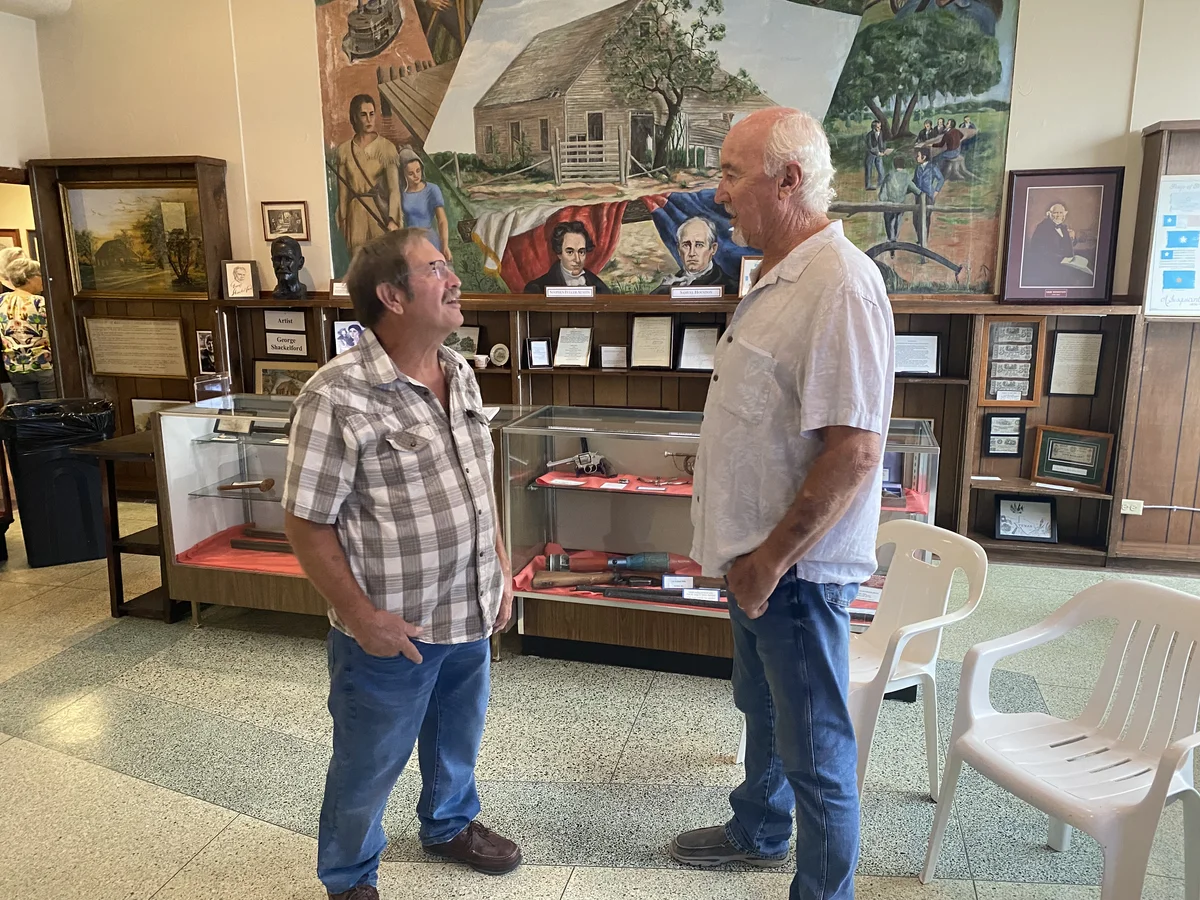
The Columbia Historical Museum is open every Thursday, Friday and Saturday from 10 a.m. to 2 p.m. Visitors can view the many displays and artifacts featured at the museum, which highlight West Columbia’s and East Columbia’s history from the 1820s when Stephen F. Austin brought “The Old 300” Anglo pioneers from America into Mexican Texas to settle the vast frontier through the Oil Boomtown days of the early 20th century, right up to the present day. Columbia, as West Columbia was originally known, is most famous for being the first capital city of the Republic of Texas in late 1836 and early 1837.
Tours of the Rosenwald School and the museum by groups can be scheduled ahead of time by calling the Columbia Historical Museum at (979) 345-6125. Daily visits are free to both the museum and the Rosenwald School, which originally was constructed around 1920 to be used for educating Black children in the East Columbia area during the days of racial segregation. The Columbia Historical Museum’s Rosenwald School is one of the few remaining in the Southern United States for tours. The old schoolhouse has a fresh coat of paint on it, thanks in part to the generosity of the Kittie Nash Groce Foundation’s board of directors.